Planet LangLit 2026
Connect. Publish. Inspire. Shape the Future


Planet LangLit 2026: International Conference on Language, Literature and Cultural Studies is a landmark academic initiative of Green University of Bangladesh (GUB), organized in partnership with leading universities and research institutions from Bangladesh, India, Egypt, Spain, and the United States. This pioneering event is designed to advance critical conversations and collaborative research at the intersection of language, literature, education, and ecology, with a central focus on planetary justice and inclusive futures.
The conference will be held on 15 and 16 January 2026 at the main campus of Green University of Bangladesh, Dhaka, with a state-of-the-art hybrid format that allows international and national participants to join either onsite or virtually via a dedicated Zoom platform. This inclusive approach ensures broad accessibility and meaningful engagement for scholars, writers, educators, and practitioners from around the globe.
Planet LangLit marks a new chapter in Bangladesh’s scholarly landscape, building on the momentum of recent international collaborations and growing global attention to literature’s role in shaping social and environmental futures. For its inaugural edition, the conference brings together distinguished keynote speakers, thought-provoking paper presentations, thematic panels, and editorial mentoring sessions. The central theme for 2026 is “Language, Literature, Education and Ecology for Planetary Justice & Inclusive Future.”
We warmly invite original, innovative research papers and creative works from academics, researchers, writers, and practitioners worldwide. All submissions will undergo rigorous double-blind peer review, and selected high-quality papers will be published in one of our four esteemed, globally indexed publication outlets: Literary Voice (Web of Science-ESCI), Literature & Aesthetics (Web of Science-ESCI), a Palgrave/Springer Edited Volume (Scopus), and the Journal of Underrepresented and Minority Progress (Scopus). Outstanding papers will be recognized with special awards, and their authors will receive priority access for future Planet LangLit events.
Join us at Planet LangLit 2026 for a defining opportunity to connect, publish, and inspire—where Bangladesh leads the conversation on planetary literary and cultural studies.
This is the first conference in Bangladesh to offer such diversified, high-impact publication pathways. We invite original and innovative papers from scholars, academics, writers, and practitioners in the fields of language, literature, cultural studies, education, and planetary justice. All submissions will be rigorously double-blind peer-reviewed. Selected high-quality papers will be published in one of our four globally recognized, indexed outlets:
(Publication: Literary Voice, Web of Science–ESCI)
● Cartographies of Extraction
● Climate Migration & Border Narratives
● Indigenous Futurisms
● Environmental Justice
● Digital Ecologies
● Memoryscapes of Violence & Repair
(Publication: Literature & Aesthetics, Web of Science–ESCI)
● Atmospheric Poetics
● Hydro-Feminist Texts
● Eco-Gothic & Affective Dread
● Soundscapes
● Digital Eco-Storyworlds
● Performing Arts & Visualities
(Publication: Palgrave/Springer Edited Volume, Scopus)
● Sites of Memory/Waste
● Diasporas & Mobilities
● Speculative Futures
● Crisis Temporalities
● Digital Humanities/GIS
● Pedagogies for Planetary Literacy
(Publication: Journal of Underrepresented and Minority Progress [JUMP], Scopus)
● Equity by Design (SDG 4.5)
● Language Policy & Rights
● Language Justice in Practice & MTB-MLE
● Sociolinguistics of Access
● Assessment Reform & Fairness
● Teacher Education & Feminist/Linguistically Responsive Pedagogy
● Literacy & Numeracy in Minoritized Languages
● Refugee, Stateless, and Crisis-Affected Learners
● Disability Inclusion & Communication
● Higher Education Pathways
● EdTech/AI, Digital Literacy & Rural Connectivity
● Indigenous Knowledge, Gender & ESD
● Urban–Rural & Caste/Class Intersections
● Language Documentation & Revitalization in Schools
● Methods & Ethics with Minoritized Populations


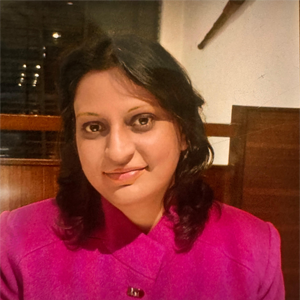


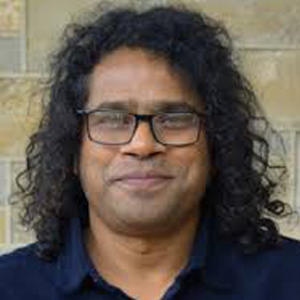

Dean and Associate Professor, Centre for Modern Languages
Universiti Malaysia Pahang al-Sultan Abdullah, Malaysia


Founding President, and Present Advisor, TESOL Society of Bangladesh
University of Dhaka


Dean, Faculty of Humanities and Social Sciences
Daffodil International University
Mohammed Abdullah Al-Mamun
Chairman, Board of Trustees
Mohammad Shorif Uddin
Vice Chancellor, Green University of Bangladesh
Khawza Iftekhar Uddin Ahmed
Pro-Vice Chancellor, Green University of Bangladesh
Prof. Dr. M Shahidullah
Dean, Faculty of Arts and Social Sciences, Green University of Bangladesh
Dr. Md. Shamim Mondol
Chairperson, Dept. of English, Green University of Bangladesh
Dr. Muhammad Tofazzel Hossain
Dept. of English, Southeast University, Bangladesh
Dr. Mohammad Rahmatullah
Dept. of English, Northern University Bangladesh
Prof. (Dr) T.S. Anand
Former Professor, University of Sirte, Lybia & Editor in Chief, Literary Voice
Prof. Dr. Tanu Gupta
Central University of Haryana, India
Prof. Dr. Muhammad Sharif Uddin
Morgan State University, USA
Prof. Dr. Ahlam Othman
Al-Azhar University, Egypt
Prof. Dr. Francisco Sáez de Adana
University of Alcalá, Spain
Prof. Dr. Carole Cusack
University of Sydney, Australia
Dr. Md. Shamim Mondol
Green University of Bangladesh
Dr. Muhammad Tofazzel Hossain
Southeast University, Bangladesh
Dr. Mohammad Rahmatullah
Northern University Bangladesh
● Title
● Author’s Name(s) & Affiliation(s)
● Abstract & Keywords
● Chosen Publication Outlet (Theme 1–4)
● Abstract Length: Maximum 300 words
● Font: Times New Roman
● Title: 15 pt (Bold, Centered)s
● Author’s Name(s): 14 pt (Centered)
● Affiliation(s): 13 pt (Centered)
● Abstract & Keywords Heading: 13 pt (Bold)
● Abstract Body & Keywords: 12 pt (Not Italic)
● Line Spacing: 1.5
● Abstract Alignment: Justified
● Abstract Paragraph: Single, No Indentation
● Keywords: Maximum 6, listed in alphabetical order, separated by semicolons, and not included in the title.
● Each abstract must clearly indicate ONE publication outlet (Theme 1–4). This selection is final.
● Abstracts and full papers will be subject to double-blind peer review.
● Only registered papers and listed authors will be invited to submit full manuscripts; no author additions after registration.


